The Rebound RumbleSM robotics game is played between two Alliances, of three teams each. Each Alliance competes by trying to score as many of the basketballs, in to the hoops as possible during the 2-minute and 15-second match. Balls scored in higher hoops earn Alliances more points. Alliances are awarded bonus points if they are balanced on bridges at the end of the match. In matches where opponent Alliances work together to balance on the white bridge, all participating teams earn additional valuable seeding points.
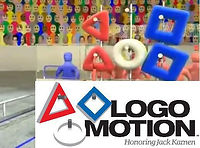
Logo Motion is the 2011 FIRST Robotics Competition game. Playing pieces are inner tubes shaped like the components of the FIRST logo. The primary objective of the game is to place them on racks to gain points. In the endgame, robots deploy smaller robots (“minibots”), to climb a tower. Minibots must be made from the FIRST Tech Challenge kit of parts. The game celebrates the 20th season of the FRC and is also meant to commemorate the artist Jack Kamen, who designed the original FIRST logo.
Breakaway is the 2010 FIRST Robotics Competition game announced on January 9, 2010.
The object of Breakaway is to score as many points for your alliance as possible. The winner of a match is determined by the most points scored when the timer ends or when all robots have stopped moving, and after penalties are assessed.
Lunacy was the challenge for the 2009 robotics season. This game was played on a special surface and slick wheels to simulate driving in one-sixth of the gravity experienced on earth to approximate the conditions on the moon. Each of six robots pulled a trailer that served as a goal for the opposing alliance. There were two alliances of three teams each. Alliances had to get special balls, or “moon rocks”, into opposing the alliance’s trailers to score points.
FIRST Overdrive is the 2008 game for the FIRST Robotics Competition, announced on January 5, 2008.
In Overdrive, teams race around the field and compete to complete counterclockwise laps around a central barrier while manipulating large 40-inch (1 m) diameter “Trackballs” over and under overpasses to score additional points.
The 2007 FRC game is called Rack ‘n’ Roll. The game involved manipulating various rings to make rows on a large central rack.
Aim High is played by two alliances, red and blue, each consisting of three robots. During a 10 second autonomous mode, robots will be programmed to score into any of the three goals: one raised center goal marked by a green vision target and two corner goals at floor level. At the end of the autonomous period, the alliance with the most points will gain a 10 point bonus and will be placed on defense for round two. Rounds two, three, and four, which are each 40 seconds long, are human-controlled rounds. Between rounds two and three, the alliances will switch from offense to defense, or from defense to offense accordingly. At the start of round 4, any alliance can score into their corresponding goals. At the end of the match, an alliance can receive bonus points by placing its three robots on a platform below the center goal. The alliance with the most points wins. Scoring will be as follows: 3 points for any ball scored in the center goal, 1 point for any ball scored in the corner goals; 10 bonus points for scoring the highest in the autonomous round; and 25 points for placing all 3 robots on the platform at the end (10 for 2 and 5 for 1).
This game was the first game in which there were three robots to an alliance. It featured pyrimidal objects made of PVC pipe as the game object, called “tetras.” The game was played on a field set up like a tic-tac-toe board, with nine larger goal tetras in three rows. The object of the game was to place the scoring tetras on the larger goal tetras, creating rows of three by having a tetra of your allaince’s color at the highest point on the goal. Tetras scored on the top of a goal tetra (a larger aluminum version) were worth 3 points, while tetras scored inside the goals were worth 1 point. Rows of three tetras on top of the goals were worth ten points, so long as the row was there at the end of the two minute and fifteen second match. Ten points could also be scored if all three alliance robots were behind the starting line at their end of the field at the end of the game.
Raising the Bar was the 2004 game for the FIRST Robotics Competition. The game included elements from previous years’ games, including mobile goals, “capping” goals with large inflatable balls, and others. In Raising the Bar, teams could score by having their human player score purple balls in any of the goals, capping the goals with a multiplier ball, or hanging their robot suspended from the 10-foot (3.0 m) high ‘chin up bar’. In the qualifying matches, Teams competed in 2-member randomly generated alliances. In the elimination rounds, 3-member alliances competed against each other with one team sitting out each match. The alliance that won two matches advanced in the tournament.
Teams started in a gray-boxed area on either side of the giant ramp. When the game begins, one human player from each team competing (4 total) go on the field and place bins (4 bins per team, with 8 per alliance, and 16 total) in their colored area. The bins have reflective tape on them so opposing robots can knock over bins in autonomous mode, but more on that later. The human players have 15 seconds to place the bins, and then step onto a pressure sensitive mat to tell the software they are off the field. If done in 10 seconds, that team will enter into autonomous mode when all teams are on the mats. If done in 15 seconds, the teams won’t enter autonomous mode, but will work afterwards. If the human player doesn’t return in 15 seconds, the robot is disabled for the match.
After all the human players are on the mats, the robots will then enter autonomous mode for 15 seconds, in which the robots move and operate on their own through programming and sensors. There were many types of autonomous modes, with more on that in a latter section.
After autonomous mode, the robots then enter into 1:45 seconds of human controlled time. During this time, human controllers could push bins outside of their opposing alliance scoring zone, stack bins in their own, which multiplies the whole score of bins by how tall the stack is (but the bins in the stack are NOT counted as part of the total), and even park themselves on top of the ramp to block oncoming traffic. At the end of the game, robots would hurry up to the platform, since for each robot entirely on the ramp, the alliance gets 25 points.
Ten points were awarded for placing the a goal in your scoring zone. 1 point for each ball in a goal that was in your scoring zone or in the opponents home zone. And 10 points for each robot touching your home zone. A popular design this year was the use of measuring tapes to slide back and touch your home zone.
Credit To FIRST Wiki





FRC Games

2010 Game

2009 Game

2011 Game
2010 Game
